FRIEZE MASTERS 2026: DAVID AARON ON POWER, BELIEF & THE ART OF SURVIVAL
Tuesday 11th August 2026

Statue of a Female Offering Bearer
Late 11th- Early 12th Dynasty, Middle Kingdom, Egypt | Image: David Brunetti courtesy David Aaron
At Frieze Masters this October, Berkeley Square’s David Aaron will bring together an extraordinary group of antiquities and natural history specimens, tracing ideas of power, belief and survival across some 68 million years.
Presented at stand C02 from 14–18 October, the exhibition places ancient Egyptian sculpture, Roman marble and Corinthian bronze alongside the fossils of prehistoric creatures, creating a fascinating dialogue between the natural world and the civilisations that sought to understand and represent it.
Among the highlights is a remarkable Egyptian Statue of a Female Offering Bearer, dating to the Late 11th–Early 12th Dynasty of the Middle Kingdom. Striking for its scale and exceptionally preserved polychrome decoration, the figure would originally have formed part of a group placed within a tomb. Such sculptures offer an insight into the importance of craftsmanship, social status and ideas surrounding death in ancient Egyptian society.
The sculpture also has a distinguished modern provenance, having belonged to French art historian and museologist Madeleine Rousseau. It is mounted on a wooden base bearing the maker’s mark of Kichizô Inagaki, the celebrated Paris-based artisan who worked with figures including Auguste Rodin and Joseph Brummer.
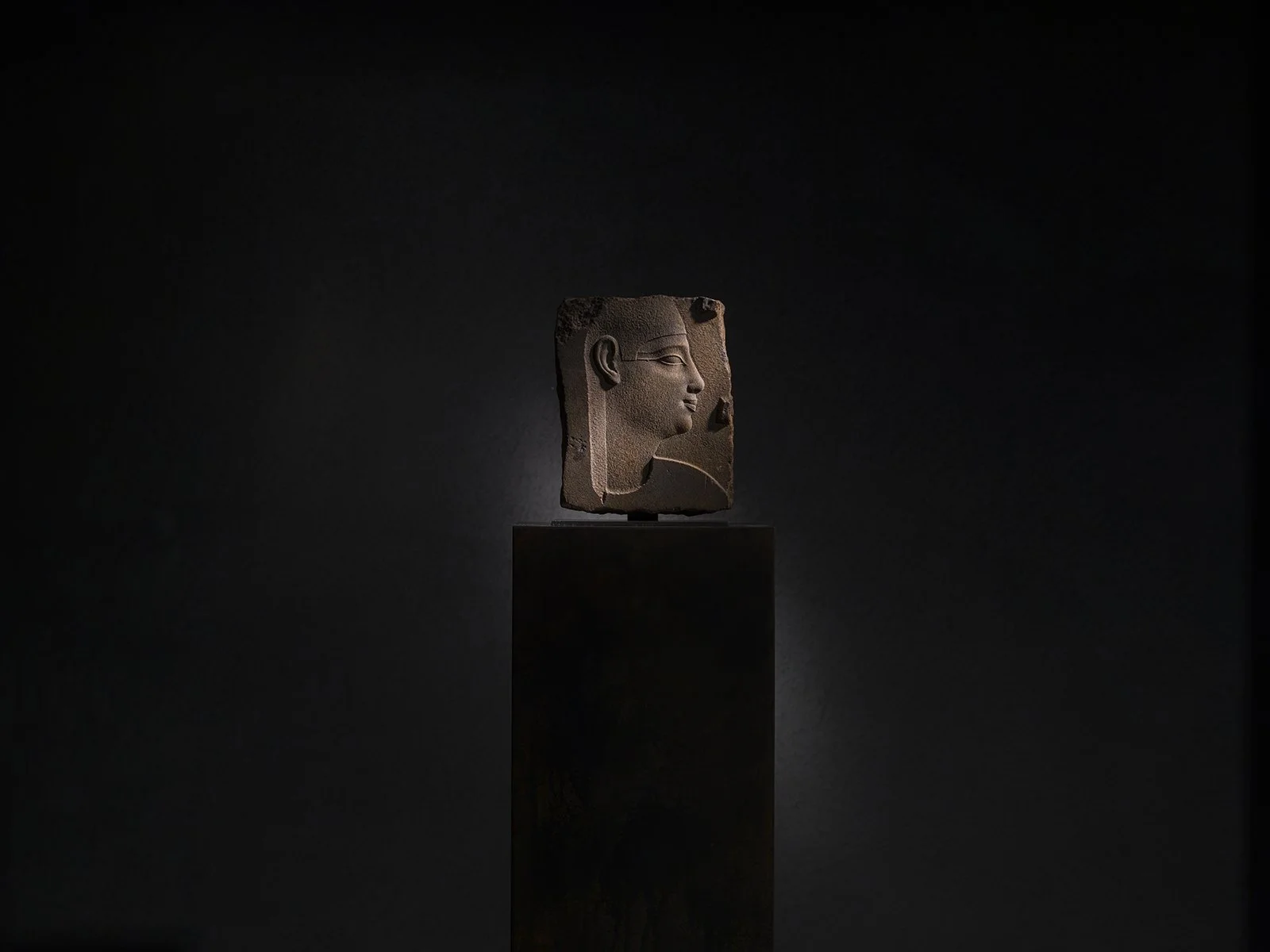
Sculptor’s Model of a Royal or Divine Head
360-282 B.C., Reign of Nectanebo II or Ptolemy I, 30th Dynasty or Early Ptolemaic Period | Image: David Brunetti courtesy David Aaron
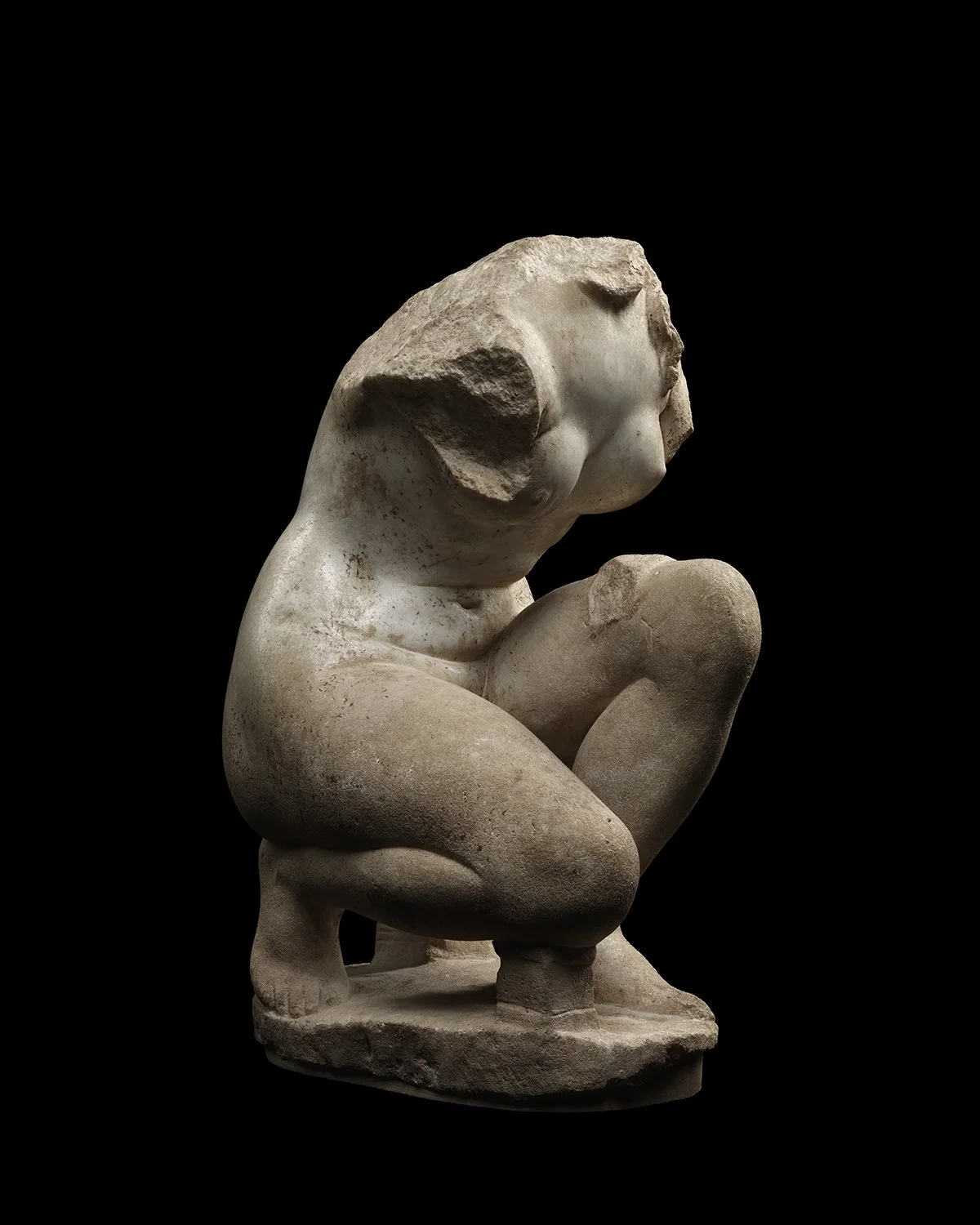
Elsewhere, a finely carved Roman marble Crouching Venus, dating from the late 1st to early 2nd century AD, reflects the artistic ideals of beauty and femininity that shaped classical sculpture. A sculptor’s model of a royal or divine Egyptian head, meanwhile, offers a glimpse into the ways representations of authority were developed and taught in the ancient world.
The story extends beyond civilisation itself. A sub-adult Triceratops skull and a Sabre Cat skull, dating millions of years apart, introduce a prehistoric dimension - reminders of a natural world shaped by adaptation and survival long before the rise of human civilisation.
Together, the works offer a compelling meditation on what has endured: the human desire to create, commemorate and express ideas of authority, alongside the remarkable persistence of life itself.
Frieze Masters, London | 14–18 October 2026 | Stand C02